Well, tomorrow morning (April 18th) I will be enroute to Petrimanu, a remote place in Parang Mountains, near Voineasa.
I will be there until April 21st.
I will be there with Sorin YO3DLW and Bob YO8RNI.
According to INMH, the weather condition will be bad, with a lot of rain, fog and low temperature.
We will try to work from mobile in YOFF-420 (LOTARITA) and YOFF-006 (COZIA), both in Natural Protected Areas .
I will use my ICOM IC-7000 with CODAN 9360 Autotune antenna and, if conditions will permit, an AH-4 ATU with a dipole.
Tomorrow I will try to be active on the road from mobile on this frequencies:
3791.0 kHz
7185.5 kHz
14342.5 kHz
18157.5 kHz
21437.5 kHz
24977.5 kHz
28327.5 kHz
73 de Adrian, yo3hjv
17 April 2014

10 April 2014
CODAN 9350 console for Nissan X-Trail
So, yesterday was my "sunny day" when I finally receive the custom-made console for my CODAN 9350/9360 antenna.
The assembly is made from a fixed steel plate and a elevated arm on which the antenna is affixed.
It's made from 5mm thick steel and it fixes onto the original rear trail hook. A few solder points and it's capable to support around 100 kg's!
Fixed plate:
 Welding:
 Inspection:
 Final look:
 Testing:


The assembly is made from a fixed steel plate and a elevated arm on which the antenna is affixed.
It's made from 5mm thick steel and it fixes onto the original rear trail hook. A few solder points and it's capable to support around 100 kg's!
Fixed plate:


22 March 2014
First QSO with Codan-ICOM setup
Yesterday I (finally) received the Codan 9350 support plate. It's a little steel square able to keep the antenna vertical to work from portable setup.
Maybe you know that in this winter I made a cable adapter to connect Codan 9350 to Icom IC-7000 as a first step to a more complex mobile setup.
Well, the first QSo was made!
The "winner" is UR4IO, Victor from Ukraine with a solid 9+ signal onto my Icom IC-7K in 18 MHz band at 16:15 LT.
My signal was (as reported) nice and strong, a "59" one!
Amazing!
I was so eager to make the first call that I forgot to record it!
But I manage to film this:
As you can see, the antenna is erected in my balcony and without counterpoise. I think it did a nice job in these conditions!
Now I am confident that I can use this setup in portable operations like YOFF, Romanian Fauna and Flora Programm or just fun from mobile. For that I have to complete my car workout...
73 de YO3HJV
Maybe you know that in this winter I made a cable adapter to connect Codan 9350 to Icom IC-7000 as a first step to a more complex mobile setup.
Well, the first QSo was made!
The "winner" is UR4IO, Victor from Ukraine with a solid 9+ signal onto my Icom IC-7K in 18 MHz band at 16:15 LT.
My signal was (as reported) nice and strong, a "59" one!
Amazing!
I was so eager to make the first call that I forgot to record it!
But I manage to film this:
As you can see, the antenna is erected in my balcony and without counterpoise. I think it did a nice job in these conditions!
Now I am confident that I can use this setup in portable operations like YOFF, Romanian Fauna and Flora Programm or just fun from mobile. For that I have to complete my car workout...
73 de YO3HJV
01 March 2014
Noi "jucatori" pe piata DMR
Anul 2014 vine cu noutati pe piata DMR, crescand competitia in acest segment.
Devine din ce in ce mai evident ca echipamentele DMR incep sa intre pe piata aducand competitorii fata in fata cu un rezultat previzibil: scaderea preturilor.
Nu poate decat sa ne bucure ca radioamatori, reteaua MARC-DMR avand o rata de crestere impresionanta, ce depaseste cu mult IRLP, ECHOLINK si sufland rece in coasta D-Star.
Avantajul standardului "deschis" devine un avantaj direct pentru radioamatorul care doreste sa utilizeze o statie compacta cu care, totusi, sa poata lua legatura si cu alti radioamatori din lume sau care calatoreste prin Europa (si nu numai) si vrea sa mai auda o voce de acasa.
Daca pana de curand aveam la dispozitie doar echipamente Motorla/Vertex si Hytera, iata ca in anul 2014 vom putea deja vorbi despre o piata in care exista oferte pe toate buzunarele.
Nu pot decat sa ma bucur ca "pariul" meu pe DMR acum vreo doi ani se confirma!
KENWOOD

 In sfarsit, Kenwood anunta intrarea pe piata DMR, deocamdata cu doua
modele de statii portabile si, in curand, cu un repetor.
Modelele TK-D200 si TK-D300 sunt disponibile atat in banda VHF cat si in UHF.
Sunt disponibile versiuni cu afisaj si fara, cu tastatura completa sau restransa.
Modelele TK-DxxxG au si GPS incorporat iar durata de exploatare a bateriei este anuntata ca fiind de 18 ore! Ramane de vazut in ce conditii sunt aceste ore...
Kenwood a fost satirizat de lansarea in DMR dar compania a sustinut ca nu fac decat sa concureze pe piata restransa din Europa in timp ce NEXEDGE ramane principalul produs digital pentru restul globului.
CONNECT SYSTEMS
 O mica firma americana care insa produce in China a anuntat recent intrarea in comunicatiile DMR cu o statie portabila destul de modesta dar care se anunta a fi o adevarata "lovitura" pe piata radioamatorilor intrucat, noua, costa pana in 200 USD (pret in USA)!
CS7000 se gaseste in versiune VHF si UHF si, din cate se spune, este perfect compatibila atat cu Motorola cat si cu Hytera, fiind rezolvate unele probleme la firmware in ultima actualizare.
Statia este "Basic", fara ecrane color si cu un acumulator de capacitate destul de mica (1700 mAh) dar la pretul asta nu cred sa fie prea multi carcotasi si este de asteptat ca piata chineza sa furnizeze rapido niste accesorii mai cu "muschi".
Soft-ul de programare este gratuit (uraaaa) si de abia astept un sample sa ma joc nitel cu ea!
Desi pe ici pe colo se zvoneste ca permite doar mod digital, din specificatii aflam ca sunt doua versiuni, una cu 32 de canale alta cu 1000 si ca ambele functioneaza DMR/FM. Simplu si farabriz-briz-uri, cred ca va fi in curand subiect de vorba si prin YO!
 TAIT
TAIT
Fara pret, destinat evident institutiilor care platesc "fara numar", TAIT este si el un jucator pe piata DMR care vine cu solutii complexe de tip repetor sau trunk.
Il trec aici doar ca sa nu il uit, nu pentru ca o sa vedem prea curand portabilele TP9300 pe meleagurile mioritice...
Nu sunt deloc urate chiar daca afisajul este monocrom...
VERTEX
 Vertex se pare ca se desparte de Motorola in ceea ce priveste echipamentele DMR si alege calea "ieftina" furnizand o gama noua, eVerge (???) de statii la un pret de aproximativ 400 USD.
De ce "ieftina"? Simplu! Se vand si pe Amazon, chestie ce mi se pare penibila pentru un producator de talia Yaesu! Probabil insa ca tinta este atat de jos ori disperarea atat de mare incat nu se mai uita pe unde isi intind taraba (sau cearsaful)!
Chiar sunt ieftine insa nu stiu cat de bune. Unele review-uri denota multumire; pretul este bun.
Reteaua MARC-DMR a radioamatorilor evolueaza frumos; acum un an erau putin peste 200 de repetoare, in prezent s-a depasit cifra de 500!
Pentru cei care doresc sa genereze un codeplug cu lista de contacte, CLICK aici.
Devine din ce in ce mai evident ca echipamentele DMR incep sa intre pe piata aducand competitorii fata in fata cu un rezultat previzibil: scaderea preturilor.
Nu poate decat sa ne bucure ca radioamatori, reteaua MARC-DMR avand o rata de crestere impresionanta, ce depaseste cu mult IRLP, ECHOLINK si sufland rece in coasta D-Star.
Avantajul standardului "deschis" devine un avantaj direct pentru radioamatorul care doreste sa utilizeze o statie compacta cu care, totusi, sa poata lua legatura si cu alti radioamatori din lume sau care calatoreste prin Europa (si nu numai) si vrea sa mai auda o voce de acasa.
Daca pana de curand aveam la dispozitie doar echipamente Motorla/Vertex si Hytera, iata ca in anul 2014 vom putea deja vorbi despre o piata in care exista oferte pe toate buzunarele.
Nu pot decat sa ma bucur ca "pariul" meu pe DMR acum vreo doi ani se confirma!
KENWOOD

 In sfarsit, Kenwood anunta intrarea pe piata DMR, deocamdata cu doua
 modele de statii portabile si, in curand, cu un repetor.
Modelele TK-D200 si TK-D300 sunt disponibile atat in banda VHF cat si in UHF.
Sunt disponibile versiuni cu afisaj si fara, cu tastatura completa sau restransa.
Modelele TK-DxxxG au si GPS incorporat iar durata de exploatare a bateriei este anuntata ca fiind de 18 ore! Ramane de vazut in ce conditii sunt aceste ore...
Kenwood a fost satirizat de lansarea in DMR dar compania a sustinut ca nu fac decat sa concureze pe piata restransa din Europa in timp ce NEXEDGE ramane principalul produs digital pentru restul globului.
CONNECT SYSTEMS
 O mica firma americana care insa produce in China a anuntat recent intrarea in comunicatiile DMR cu o statie portabila destul de modesta dar care se anunta a fi o adevarata "lovitura" pe piata radioamatorilor intrucat, noua, costa pana in 200 USD (pret in USA)!
CS7000 se gaseste in versiune VHF si UHF si, din cate se spune, este perfect compatibila atat cu Motorola cat si cu Hytera, fiind rezolvate unele probleme la firmware in ultima actualizare.
Statia este "Basic", fara ecrane color si cu un acumulator de capacitate destul de mica (1700 mAh) dar la pretul asta nu cred sa fie prea multi carcotasi si este de asteptat ca piata chineza sa furnizeze rapido niste accesorii mai cu "muschi".
Soft-ul de programare este gratuit (uraaaa) si de abia astept un sample sa ma joc nitel cu ea!
Desi pe ici pe colo se zvoneste ca permite doar mod digital, din specificatii aflam ca sunt doua versiuni, una cu 32 de canale alta cu 1000 si ca ambele functioneaza DMR/FM. Simplu si farabriz-briz-uri, cred ca va fi in curand subiect de vorba si prin YO!
 TAIT
TAITFara pret, destinat evident institutiilor care platesc "fara numar", TAIT este si el un jucator pe piata DMR care vine cu solutii complexe de tip repetor sau trunk.
Il trec aici doar ca sa nu il uit, nu pentru ca o sa vedem prea curand portabilele TP9300 pe meleagurile mioritice...
Nu sunt deloc urate chiar daca afisajul este monocrom...
VERTEX
 Vertex se pare ca se desparte de Motorola in ceea ce priveste echipamentele DMR si alege calea "ieftina" furnizand o gama noua, eVerge (???) de statii la un pret de aproximativ 400 USD.
De ce "ieftina"? Simplu! Se vand si pe Amazon, chestie ce mi se pare penibila pentru un producator de talia Yaesu! Probabil insa ca tinta este atat de jos ori disperarea atat de mare incat nu se mai uita pe unde isi intind taraba (sau cearsaful)!
Chiar sunt ieftine insa nu stiu cat de bune. Unele review-uri denota multumire; pretul este bun.
Reteaua MARC-DMR a radioamatorilor evolueaza frumos; acum un an erau putin peste 200 de repetoare, in prezent s-a depasit cifra de 500!
Pentru cei care doresc sa genereze un codeplug cu lista de contacte, CLICK aici.
07 January 2014
LCD to a LPT port on my Thinkpad
I did had some spare time and I was looking around for a quick project.
I am using a Thinkpad X61 with a docking station on which I have native COM and LPT ports. Both are nice to connect something.
In my junk box i do have some toys that was never used.
One of them is a a Vacuum Fluorescent Display (or VFD) from a POS. It's a 2x20 dot matrix display used for showing the merchandise price to the customer.
I want to use it (sometime, in the near future) as a big display for my ICOM IC-7000...
The first step was to check if the display is OK.
According to the self-test mode, it's a CD7220-I display, for 24V DC, with a 5x7 matrix 9,2 x 6 mm character and, best of all, its RS232 compatible!
Works nice and is expecting a small PIC to work with!
After that, my bench was somehow in need for another "action" so I was looking in the junk box and found a nice 4x20 LCD!
This was best for connecting to my laptop to show some summaries...
So, I connected to the LPT port...
Drop a line for more informations...
73 de Adrian, YO3HJV
I am using a Thinkpad X61 with a docking station on which I have native COM and LPT ports. Both are nice to connect something.
In my junk box i do have some toys that was never used.
One of them is a a Vacuum Fluorescent Display (or VFD) from a POS. It's a 2x20 dot matrix display used for showing the merchandise price to the customer.
I want to use it (sometime, in the near future) as a big display for my ICOM IC-7000...
The first step was to check if the display is OK.
According to the self-test mode, it's a CD7220-I display, for 24V DC, with a 5x7 matrix 9,2 x 6 mm character and, best of all, its RS232 compatible!
Works nice and is expecting a small PIC to work with!
After that, my bench was somehow in need for another "action" so I was looking in the junk box and found a nice 4x20 LCD!
This was best for connecting to my laptop to show some summaries...
So, I connected to the LPT port...
Drop a line for more informations...
73 de Adrian, YO3HJV
13 December 2013
KENWOD TM-D710G


Well, it's a little embarrassing because the Echolink is not the latest trick in connecting remote repeaters or radios (altough the simp[liest one) and a GPS inside the front panel is not a very complicated matter.
As a fact, I done my own RC-D710G (bragging!) a few years ago and it works nice!
Maybe I lost a patent, who knows?
27 November 2013
ICOM IC-7000 and CODAN 9350 auto-tune antenna
After a looooong search, I bought a CODAN 9350 radio with 9360 antenna. After playing a lot with the radio I concluded that is not the best option for a mobile HF setup so I put a ICOM IC-7000 with a LDG Z100 Plus ATU onto my car.
Maybe the ICOM is not better than CODAN in term of reliability or sound but in a Ham's world, the VFO is essential stuff.
So, I was wondering if i can put the CODAN 9350 to work with the ICOM after I read a lot of positive stuff about the Codan antenna.
As you maybe know, the antenna has a control socket with a dedicated connector (military grade) on the antenna side. The original cable that came tih the Codan setup has had a DB15 male connector to the radio side.
ICOM has a dedicated connector for a external ATU - ICOM AH4; on the same connector we have the power supply from the radio and command signals.
A little research on the internet gave me VK1OD's website where he shows a dedicated Protocol converter. As the 9360 has a very nice feature of a RF Preamplifier, very useful for scanning, it's higly recommended but the know how is a little costly and I am not sure that I really need that preamplifier.
To keep it short, I found that a direct connection between the ICOM and CODAN 9360 it is possible!
For the cable I used the LDG "Y" accessory cable which have a nice ICOM connector. Of course, I cut it to connect the wires to a DB 15 female.


The AMPHENOL connector on the CODAN Radio side:

Maybe the ICOM is not better than CODAN in term of reliability or sound but in a Ham's world, the VFO is essential stuff.
So, I was wondering if i can put the CODAN 9350 to work with the ICOM after I read a lot of positive stuff about the Codan antenna.
As you maybe know, the antenna has a control socket with a dedicated connector (military grade) on the antenna side. The original cable that came tih the Codan setup has had a DB15 male connector to the radio side.
ICOM has a dedicated connector for a external ATU - ICOM AH4; on the same connector we have the power supply from the radio and command signals.
A little research on the internet gave me VK1OD's website where he shows a dedicated Protocol converter. As the 9360 has a very nice feature of a RF Preamplifier, very useful for scanning, it's higly recommended but the know how is a little costly and I am not sure that I really need that preamplifier.
To keep it short, I found that a direct connection between the ICOM and CODAN 9360 it is possible!
For the cable I used the LDG "Y" accessory cable which have a nice ICOM connector. Of course, I cut it to connect the wires to a DB 15 female.


The AMPHENOL connector on the CODAN Radio side:

Here is the cable diagram:
ICOM CONNECTOR DB15 AMPHENOL
KEY 11 D
START 4 C
+ 13,8 V 12 AND 13 A
GND 14 AND 15 B
After testing, looked to me that the setup is OK and working. Unfortunately, I do not have (yet) the adequate bullbar for that antenna.
yo3hjv
PS
Some other interesting resource:
https://github.com/darksidelemm/IC-9350/tree/master/Icom9350
https://github.com/TheSkorm/IC-9350
25 November 2013
ARHAB Special design antenna
A couple of years ago I was asked by Florin Mingireanu and Catalin Beledea to assemble a team for Stratospherium I experiment.
The goal was to have the balloon tracked via APRS both on air and ground after landing.
We had to use a Byonics tracker, the 10W version but we was limited somehow by the battery due to the limit in weight for the payload.
Instead of maximizing the transmitted power and using the maximum power, I was thinking to use less power but with a better antenna. After all, this is how we are doing on QSO's, no?
Using a ground plane antenna which have the main lobes above the ground plate or counterpoises was out of question. Other disadvantage was the big null below the radiator. If the antenna was put downside, the second null (the one continuing the radiator) was to be exactly where the tracking team was, so it was the time to design something new.
I approach the new design having in mind that the receiver has to be below the payload so, the diagram has to be relevant in this.
I used MMANA-GAL for simulations and, after various (crazy) designs, the turnstile antenna capture my attention.
But the "classic" turnstile was, somehow, too heavy for our balloon so it has to be simplified.
Well, with not too much expectations, I put into MMANA a simple 2 x 2 dipole to see if my intuition will show something interesting. The ideea was to put two dipoles in paralell to lower the impedance close to 50 Ohm.
The simulation result was encouraging so I trimmed further more the design and made a few PCB to verify the theory. Of course, there was a lot of coat hangers but, fortunately, my wife is very understanding!
I measured the SWR with a Anritsu Sitemaster 331 and the results was well under 1:1.2!
The final result is below; the drawings are hand made but I hope that are clear to everyone who want to made this antenna.
In "real life", the antenna performed very well, radiating a lot below the balloon and very little at low negative angles. Therefore, distant reception was not so good but under the "belly" it was plenty of RF. We used only 3W from the tracker and all was OK.
The same antenna (not only the same design but the same PCB and wires) was used in Stratospherium II and Eclipser I in Australia in 2012.
We observed two more "features": the antena performed well when the payload was on the ground (we received the signals from the payload at about 4 km) and the antenna helped the payload to remain stable, countering the drag force from the wind on the parachute after landing.
As for the name of this antenna, I don't know! Leave a short comment if you have some ideeas. Or questions.
73 de YO3HJV, Adrian
The goal was to have the balloon tracked via APRS both on air and ground after landing.
We had to use a Byonics tracker, the 10W version but we was limited somehow by the battery due to the limit in weight for the payload.
Instead of maximizing the transmitted power and using the maximum power, I was thinking to use less power but with a better antenna. After all, this is how we are doing on QSO's, no?
 |
| Ground Plane antenna diagram |
I approach the new design having in mind that the receiver has to be below the payload so, the diagram has to be relevant in this.
I used MMANA-GAL for simulations and, after various (crazy) designs, the turnstile antenna capture my attention.
 |
| Classic Turnstile antenna |
Well, with not too much expectations, I put into MMANA a simple 2 x 2 dipole to see if my intuition will show something interesting. The ideea was to put two dipoles in paralell to lower the impedance close to 50 Ohm.
The simulation result was encouraging so I trimmed further more the design and made a few PCB to verify the theory. Of course, there was a lot of coat hangers but, fortunately, my wife is very understanding!
I measured the SWR with a Anritsu Sitemaster 331 and the results was well under 1:1.2!
The final result is below; the drawings are hand made but I hope that are clear to everyone who want to made this antenna.
In "real life", the antenna performed very well, radiating a lot below the balloon and very little at low negative angles. Therefore, distant reception was not so good but under the "belly" it was plenty of RF. We used only 3W from the tracker and all was OK.
The same antenna (not only the same design but the same PCB and wires) was used in Stratospherium II and Eclipser I in Australia in 2012.
We observed two more "features": the antena performed well when the payload was on the ground (we received the signals from the payload at about 4 km) and the antenna helped the payload to remain stable, countering the drag force from the wind on the parachute after landing.
As for the name of this antenna, I don't know! Leave a short comment if you have some ideeas. Or questions.
73 de YO3HJV, Adrian
 |
| The wires |
 |
| The PCB |
 |
| Assembly |
 |
| MMANA-GAL simulation |
 |
| SWR results with ANRITSU SITEMASTER 331 |
 |
| Before launching Stratospherium I |
 |
| Before launching Stratospherium II |
26 October 2013
Thinkpad Batteries. Myths and realities.
Searching for some specific problems related to Power Management - a bit of software from Lenovo, i was run into a lot of discussions about how bad batteries are...
Well, might be some true when we look at the "compatible" batteries market but also the user might be responsible for the bad performance.
Understanding the batteries is simple when one know the minimal set of rules.
It is not unusual that a "compatible" battery to perform oustanding, just like a branded one or some branded batteries to show "sudden death symptome.
There is no such a "timed bombe" circuit to force one to buy another battery!
I heard some guys trying to explain that inside the battery circuit is a controller which monitor the total number of the charge-discharge cycles and after a certain number the chip decide to kill the battery. Might be some truth around but, what is a "cycle"? When a charge-discharge count as a "cycle"? You see, it's not so simple!
The battery pack is more than some cells in series, parallel or mixed circuits.
Usually, there is a chip inside who monitors the voltage and the capacity of each cell pack (on extended packs, there are two cells in parallel) to decide if the pack is OK or not and also to measure the input and output capacity (gauge meter).
That circuit need a reset from time to time to reestablish the relation between the voltage and the overall capacity. This is the "battery reset" or "gauge reset" procedure presented on some specific software.
A little paranthesis here: often I see that the preloaded software from the PC producer is considered "bloatware" and the user relies on the Windows's driver. Or the Linux's, if you like...
It's a major mistake as the producer of the hardware provided pieces of circuits to interact with that software in order to have a correct exploitation of the battery pack.
The battery pack also communicate with the computer at a very low level, BIOS controlled laguage, via a serial interface, usually I2C. The charger circuit inside the computer listen for specific information from the battery pack ad take decisions like charging, not charging or reject the battery due to some failure. Also the version of the software may have some bugs which determines erratic behavior.
It might be usefull to know that a Li chemistry battery does not like the 100% charging and a 95% limit can and will prolonge the battery life more over the "500 cycle" life! Not too many knows that iPads usually use around 90% from the overall capacity of the battery and this is one reason for the life of that devices. The other is Quality controll.
There might be a risk of failure but: Use an up-to-date BIOS FW, use adequate and up-to-date drivers and software for Power management and set the limit of the charging at 90 - 95 % and you will have a happy battery! Another thing, Li chemistry does not like high temperatures so try to cool down the laptop by maintenance of the main fan. I have a T43 with a 2009 battery, a X61tablet with a 2011 battery and a X61 with a 2012 battery. All are extended, all are "compatible" not originals and all are over 85% of their factory capacity, except the T43 which is at about 74%. Well, as a matter of fact, the T43 was finally destroyed after more than 7 years of impecable service by my daughter and 1 L of water...
I'l post here some pictures from the T43's battery pack, made in 2009 and used till a few days ago, with more than 70% of nominal capacity.
 You can see that there are 9 LiIon cells, 3 sets of three in parallel. This means 3 x 3,5V = 10.5 V nominal.
When full charge, the voltage is 3 x 4.2V = 12.6V and, by the same rationale, the discharge voltage is 9 V (3 V cutoff voltage per cell).
 Also, inside the battery is a small PCB on which wee see the FET transistors and a small ATMEGA Microcontroller Unit (ATMEL MEGA406).


According to the datasheet:
_Page_16.jpg) ATmega406 smart battery solution, the first single-chip implementation on the market. In a single die, the ATmega406 includes a powerful AVR MCU, a voltage regulator capable of being powered directly from the battery pack, analog to digital converters custom tailored for battery monitoring, high voltage charge and discharge FET drivers, cell balancing capabilities, and independent battery protection circuitry. This true one-chip solution saves design cost and PCB space in addition to broadening the functionality of the smart battery application. With the accuracy of the ATmega406, battery vendors will be able to predict the charge status of the battery more accurately. The better the knowledge of the battery cell, the more it can be allowed to be depleted before reaching the level where the cell itself starts to be damaged. This effectively increases actual battery capacity.
ATmega406 smart battery solution, the first single-chip implementation on the market. In a single die, the ATmega406 includes a powerful AVR MCU, a voltage regulator capable of being powered directly from the battery pack, analog to digital converters custom tailored for battery monitoring, high voltage charge and discharge FET drivers, cell balancing capabilities, and independent battery protection circuitry. This true one-chip solution saves design cost and PCB space in addition to broadening the functionality of the smart battery application. With the accuracy of the ATmega406, battery vendors will be able to predict the charge status of the battery more accurately. The better the knowledge of the battery cell, the more it can be allowed to be depleted before reaching the level where the cell itself starts to be damaged. This effectively increases actual battery capacity.
Short said, it's a whole battery management system inside the battery pack!
Also there are rumors that the battery itself has the "knowledge" of the manufaturing date (indeed, this informations are programmed inside the MCU non-volatile memory) and also "know" when to kill the battery (usually, after the warranty expires) which, of course, it's false because, at least, ATmega 406, doesn't have a RTCC (Realt Time Calendar Calculator).
But stay! In the datasheet it says that:
You catch it? The battery firmware can be upgraded via the PC on which is connected! This may explain why the "bloatware" can do the job and the generic drivers cannot! Think about!
Regards from Adrian, yo3hjv
Well, might be some true when we look at the "compatible" batteries market but also the user might be responsible for the bad performance.
Understanding the batteries is simple when one know the minimal set of rules.
It is not unusual that a "compatible" battery to perform oustanding, just like a branded one or some branded batteries to show "sudden death symptome.
There is no such a "timed bombe" circuit to force one to buy another battery!
I heard some guys trying to explain that inside the battery circuit is a controller which monitor the total number of the charge-discharge cycles and after a certain number the chip decide to kill the battery. Might be some truth around but, what is a "cycle"? When a charge-discharge count as a "cycle"? You see, it's not so simple!
The battery pack is more than some cells in series, parallel or mixed circuits.
Usually, there is a chip inside who monitors the voltage and the capacity of each cell pack (on extended packs, there are two cells in parallel) to decide if the pack is OK or not and also to measure the input and output capacity (gauge meter).
That circuit need a reset from time to time to reestablish the relation between the voltage and the overall capacity. This is the "battery reset" or "gauge reset" procedure presented on some specific software.
A little paranthesis here: often I see that the preloaded software from the PC producer is considered "bloatware" and the user relies on the Windows's driver. Or the Linux's, if you like...
It's a major mistake as the producer of the hardware provided pieces of circuits to interact with that software in order to have a correct exploitation of the battery pack.
The battery pack also communicate with the computer at a very low level, BIOS controlled laguage, via a serial interface, usually I2C. The charger circuit inside the computer listen for specific information from the battery pack ad take decisions like charging, not charging or reject the battery due to some failure. Also the version of the software may have some bugs which determines erratic behavior.
It might be usefull to know that a Li chemistry battery does not like the 100% charging and a 95% limit can and will prolonge the battery life more over the "500 cycle" life! Not too many knows that iPads usually use around 90% from the overall capacity of the battery and this is one reason for the life of that devices. The other is Quality controll.
There might be a risk of failure but: Use an up-to-date BIOS FW, use adequate and up-to-date drivers and software for Power management and set the limit of the charging at 90 - 95 % and you will have a happy battery! Another thing, Li chemistry does not like high temperatures so try to cool down the laptop by maintenance of the main fan. I have a T43 with a 2009 battery, a X61tablet with a 2011 battery and a X61 with a 2012 battery. All are extended, all are "compatible" not originals and all are over 85% of their factory capacity, except the T43 which is at about 74%. Well, as a matter of fact, the T43 was finally destroyed after more than 7 years of impecable service by my daughter and 1 L of water...
I'l post here some pictures from the T43's battery pack, made in 2009 and used till a few days ago, with more than 70% of nominal capacity.
 You can see that there are 9 LiIon cells, 3 sets of three in parallel. This means 3 x 3,5V = 10.5 V nominal.
When full charge, the voltage is 3 x 4.2V = 12.6V and, by the same rationale, the discharge voltage is 9 V (3 V cutoff voltage per cell).
 Also, inside the battery is a small PCB on which wee see the FET transistors and a small ATMEGA Microcontroller Unit (ATMEL MEGA406).


According to the datasheet:
_Page_16.jpg) ATmega406 smart battery solution, the first single-chip implementation on the market. In a single die, the ATmega406 includes a powerful AVR MCU, a voltage regulator capable of being powered directly from the battery pack, analog to digital converters custom tailored for battery monitoring, high voltage charge and discharge FET drivers, cell balancing capabilities, and independent battery protection circuitry. This true one-chip solution saves design cost and PCB space in addition to broadening the functionality of the smart battery application. With the accuracy of the ATmega406, battery vendors will be able to predict the charge status of the battery more accurately. The better the knowledge of the battery cell, the more it can be allowed to be depleted before reaching the level where the cell itself starts to be damaged. This effectively increases actual battery capacity.
ATmega406 smart battery solution, the first single-chip implementation on the market. In a single die, the ATmega406 includes a powerful AVR MCU, a voltage regulator capable of being powered directly from the battery pack, analog to digital converters custom tailored for battery monitoring, high voltage charge and discharge FET drivers, cell balancing capabilities, and independent battery protection circuitry. This true one-chip solution saves design cost and PCB space in addition to broadening the functionality of the smart battery application. With the accuracy of the ATmega406, battery vendors will be able to predict the charge status of the battery more accurately. The better the knowledge of the battery cell, the more it can be allowed to be depleted before reaching the level where the cell itself starts to be damaged. This effectively increases actual battery capacity. Short said, it's a whole battery management system inside the battery pack!
Also there are rumors that the battery itself has the "knowledge" of the manufaturing date (indeed, this informations are programmed inside the MCU non-volatile memory) and also "know" when to kill the battery (usually, after the warranty expires) which, of course, it's false because, at least, ATmega 406, doesn't have a RTCC (Realt Time Calendar Calculator).
But stay! In the datasheet it says that:
The ATmega406 is fully in-field upgradeable through the Two Wire Interface (I2C compatible), making it possible to update it s software from the PC in which the battery pack is installed. The on-chip debug system has full access to all features on the chip, making it easy to do software development.
Regards from Adrian, yo3hjv
30 September 2013
Experience put to work
.png "SynergyByte") |
SynergyBYTE is the concept that describe our team.
It's an open team but don't call us, we will ask you to join us.
.png)
26 September 2013
TRBONET IPSC for Radioamateur DMR YO Net
Today is a great day! I manage to connect two DR3000 repeaters into a IPSC network. Well, I tried before but something seemed to be wrong as I didn't manage to hear a QSO from one repeater's frequency to another! Only after I put both repeaters under a router I had the IPSC running! Maybe this is a clue for other experimenters like me!


08 September 2013
Antena gonflabila pentru CUBESAT
 O echipa de cercetatori de la MIT (Massachussets Institute for Technologies), condusa de Alessandra Babuscia anunta dezvoltarea unui nou proiect de antena pentru microsateliti cunoscuti sub numele de CubeSat.
Datorita dimensiunilor mici, microsatelitii folosesc in prezent antene dipol sau monopol. Datorita dimensiunilor, aceste antene au castig relativ mic ceea ce restrictioneaza largimea de banda utilizabila pentru transmisia informatiilor catre statiile la sol; o antena cu castig mai mare ar permite cresterea acestei largimi de banda.
Professor Sara Seager KB1WTW – Image credit MIT
Echipa MIT, condusa de Alessandra Babuscia este parte a unui grup de cercetare compus din radioamatori din care fac parte Profesorul Sara Seager KB1WTW, Mary Knapp KB1WUA, Benjamin Corbin, Mark Van de Loo - absolventi MIT, si Rebecca Jensen-Clem de la California Institute of Technology.
Noul design conceput de echipa poate creste semnificativ distanta de comunicatie al acestor sateliti, permitandu-le chiar instalarea pe orbite mai inalte. Echipa a construit si testat antena care ocupa un spatiu restrans in satelit si se poate umfla odata ce acesta a ajuns pe orbita.
Echipa sustine ca distanta la care se poate comunica cu ajutorul acestei noi antene creste cu pana la 7 ori fata de distanta acoperita cu antenele CubeSat traditionale.

Alessandra Babuscia – Image Credit MIT
Pudra "magica"
O antena gonflabila nu este, de fapt, o idee noua. De fapt, experimente anterioare au demonstrat validitatea principiului pe sateliti mai mari. Sistemul insa necesita o serie de dispozitive specifice (valve de presiune, rezervoare de gaz) care ar ocupa un spatiu pretios in microsatelitii CubeSat. Babuscia ridica si o alta problema de ordin practic: un satelit cu dispozitive presurizate la bordul rachetei purtatoare poate pune probleme pentru securitatea incarcaturii, mai ales ca microsatelitii sunt, de regula, incarcatura secundara. Ei pot exploda, cu consecinte dezastruoase pentru echipaj si incarcatura principala.
Din acest motiv, s-a cautat o alta metoda pentru umflarea acestor antene.

Mary Knapp KB1WUA – Image credit Interplanetary Small Satellite Conference
Echipa de cercetare a gasit o alta metoda constand in sublimarea la presiune zero a unei pulberi . Aceasta inseamna ca o pulbere, expusa presiunii din spatiul cosmic se va transforma, din stare solida, direct in gaz.
Testarea ideei
Babuscia si colegii sai au construit doua astfel de antene, folosind Mylar: una in forma conica si a doua in forma cilindrica. Au determinat configuratia optima la pliere si au reusit sa inghesui aceasta antena intr-un spatiu de 10cmc.
Au testat apoi modul in care antena se umfla, intr-o camera vidata iar testul a avut rezultate pozitive.

Rebecca Jensen-Clem – Image credit Interplanetary Small Satellite Conference
Desi, cu potential major, antena din Mylar subtire poate fi vulnerabila la fragmentele meteoritice sau chiar la deseurile care pot fi intalnite pe orbitele joase; una din solutiile pentru a compensa micile perforatii ar fi o rezerva suplimentara de pulbere care sa compenseze pierderile de presiune din antena.

MIT student with a CubeSat – Image credit MIT
Kar-Ming Cheung, inginer la Laboratorul de Propulsie Reactiva de la NASA (JPL), specializat in comunicatiile spatiale a afirmat ca o antena directionala a fost, pana acum, in afara discutiei referitoare microsateliti si ca "aceasta idee este foarte promitatoare".

Students build a 3U CubeSat – Image Credit NASA
Traducere si adaptare, Adrian, YO3HJV.
Articolul original: http://amsat-uk.org/2013/09/07/inflatable-antenna-could-give-cubesats-greater-reach/
Hamradio contesting - a menace to hamspirit
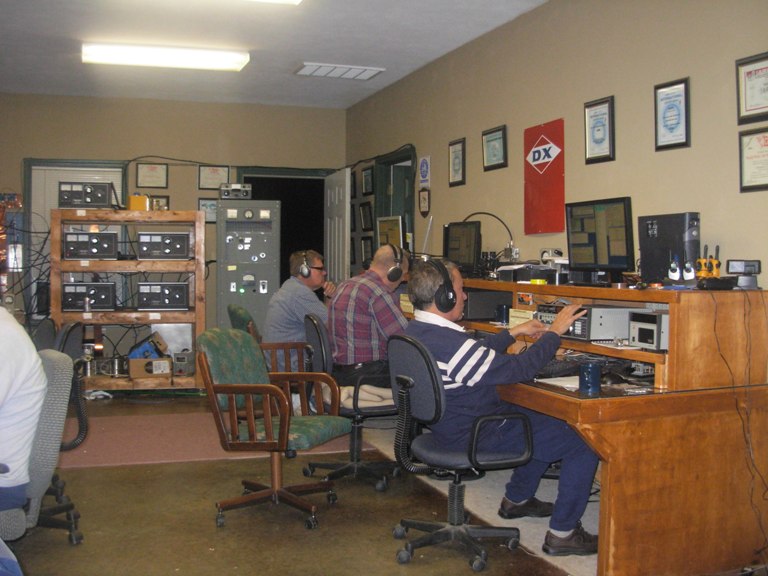 Well, some will say that i am wrong only by reading the title...
As a foreword, it is not my intention to blame contesters.
I am in my early 40 and have a busy job, some other particular projects and can operate my radio in weekends.
I do not have, yet, established a "big-gun" station; only 100 W from a FT2k, a vertical and a Inverted V antenna on the rooftop of my building.
I also have some familly obligations here so I cannot stand in front of my radio to make QSOs in weekdays.
The only time I have for chatting is in the weekends, even in holydays BUT...
Yeah, you already know!
Try to search a weekend WITHOUT a contest!
As a practical observation, not a single weekend for old fashion hamradio QSO in this summer! Everytime I powered up the radio, there was a contest. thousand of Watts, QRM from "Russian QRP" and all you can hear are contest exchanges and the ubiquitous "599".
Is this hamradio? I think is not!
The regulations - at least in YO - ask for operators to send a REAL REPORT in the QSO's. I don't know how, but in the contests I NEVER heard a REAL REPORT based on Strenght, Rediability and Tone!
We, the OM, teach the younger how to sent a receiving report in a QSO. The contest means that the contesters are tested about the capacity to copy signals, to wrote the (correct) informations in a LOG and to sent back some (correct) informations AND to make a certain number of QSO's in the contest time..
Instead, the contest become more and more a speed run.
I am bored of local QSO's about weather and cristal sets; I want to discuss with other hams about Emergency comms, about how their local clubs manage to keep the team, about new technology.
Well, it is almost impossible to do so in weekends on shortwave!
Try this on a contest!
The progress in hamradio, at least in the last years, means big antennas and QRO mainly for the contest activity.
It is almost impossible to chat with a fellow ham about new receving techniques, about new modulations or something like that!
The ham bands was established also for experimenting but, at least on IARU bands, you hardly find a non-contesting segment to do some tests with a faint signal station... Spletters and QRM.
So, more and more, the experimenting activity moved to internet discussion groups which, in my opinion means death to real hamspirit! The contesting is only a fraction of that!
73 de YO3HJV.
The picture is courtesy of http://k5go.com/
Subscribe to:
Posts (Atom)
Most viewed posts in last 30 days
-
 I have an old Proxxon tool and, like many old power tools, the built-in speed controller is not working anymore. So, I was thinking to do a ...
 -
Kenwood Programing Software FIRMWARE: KDS-100 504XXXXX 4A46 PTT ID Display feature 176.86 KB CURRENT 401XXXXX F7FC Corrects lock up whe...
-
 I had some projects to made and those involve external ATU connectors for ICOM radios; I think it's better to have some informations her...