08 September 2013

Antena gonflabila pentru CUBESAT

Professor Sara Seager KB1WTW - Image credit MITO echipa de cercetatori de la MIT (Massachussets Institute for Technologies), condusa de  Alessandra Babuscia anunta dezvoltarea unui nou proiect de antena pentru microsateliti cunoscuti sub numele de CubeSat.
Datorita dimensiunilor mici, microsatelitii folosesc in prezent antene dipol sau monopol. Datorita dimensiunilor, aceste antene au castig relativ mic ceea ce restrictioneaza largimea de banda utilizabila pentru transmisia informatiilor catre statiile la sol; o antena cu castig mai mare ar permite cresterea acestei largimi de banda.
Professor Sara Seager KB1WTW – Image credit MIT


Echipa MIT, condusa de Alessandra Babuscia  este parte a unui grup de cercetare compus din radioamatori din care fac parte Profesorul Sara Seager KB1WTW, Mary Knapp KB1WUA, Benjamin Corbin, Mark Van de Loo - absolventi MIT,  si Rebecca Jensen-Clem de la California Institute of Technology.
Noul design conceput de echipa poate creste semnificativ distanta de comunicatie al acestor sateliti, permitandu-le chiar instalarea pe orbite mai inalte. Echipa a construit si testat antena care ocupa un spatiu restrans in satelit si se poate umfla odata ce acesta a ajuns pe orbita.
Echipa sustine ca distanta la care se poate comunica cu ajutorul acestei noi antene creste cu pana la 7 ori fata de distanta acoperita cu antenele CubeSat traditionale.
Alessandra Babuscia - Image Credit MIT
Alessandra Babuscia – Image Credit MIT
“Cu aceasta antena vor fi posibile comunicatii chiar de pe Luna”  sustine Alessandra Babuscia, care conduce acasta cercetare in cadrul studiilor postdoctorale la MIT. "Aceasta antena este cea mai ieftina si mai economica solutie la problema comunicatiilor" mai afirma cercetatoarea.

Pudra "magica"
O antena gonflabila nu este, de fapt, o idee noua. De fapt, experimente anterioare au demonstrat validitatea principiului pe sateliti mai mari. Sistemul insa necesita o serie de dispozitive specifice (valve de presiune, rezervoare de gaz) care ar ocupa un spatiu pretios in microsatelitii CubeSat. Babuscia ridica si o alta problema de ordin practic: un satelit cu dispozitive presurizate la bordul rachetei purtatoare poate pune probleme pentru securitatea incarcaturii, mai ales ca microsatelitii sunt, de regula, incarcatura secundara. Ei pot exploda, cu consecinte dezastruoase pentru echipaj si incarcatura principala.
Din acest motiv, s-a cautat o alta metoda pentru umflarea acestor antene.

Mary Knapp KB1WUA - Image credit Interplanetary Small Satellite Conference
Mary Knapp KB1WUA – Image credit Interplanetary Small Satellite Conference

Echipa de cercetare a gasit o alta metoda constand in sublimarea la presiune zero a unei pulberi . Aceasta inseamna ca o pulbere, expusa presiunii din spatiul cosmic se va transforma, din stare solida, direct in gaz.

Testarea ideei
Babuscia si colegii sai au construit doua astfel de antene, folosind Mylar: una in forma conica si a doua in forma cilindrica. Au determinat configuratia optima la pliere si au reusit sa inghesui aceasta antena intr-un spatiu de 10cmc.
Au testat apoi modul in care antena se umfla, intr-o camera vidata iar testul a avut rezultate pozitive.
Rebecca Jensen-Clem - Image credit Interplanetary Small Satellite Conference
Rebecca Jensen-Clem – Image credit Interplanetary Small Satellite Conference
Echipa a testat apoi caracteristicile  electromagnetice ale acestei antene. In simularile celor doua geometrii, s-a constatat ca antena de forma cilindrica se comporta mai bine decat cea conica.
Desi, cu potential major, antena din Mylar subtire poate fi vulnerabila la fragmentele meteoritice sau chiar la deseurile care pot fi intalnite pe orbitele joase; una din solutiile pentru a compensa micile perforatii ar fi o rezerva suplimentara de pulbere care sa compenseze pierderile de presiune din antena.

MIT student with a CubeSat - Image credit MIT
MIT student with a CubeSat – Image credit MIT

Kar-Ming Cheung, inginer la Laboratorul de Propulsie Reactiva de la NASA (JPL), specializat in comunicatiile spatiale a afirmat ca o antena directionala a fost, pana acum, in afara discutiei referitoare microsateliti si ca "aceasta idee este foarte promitatoare".


Students build a 3U CubeSat - Image Credit NASA
Students build a 3U CubeSat – Image Credit NASA

Traducere si adaptare, Adrian, YO3HJV. 
Articolul original: http://amsat-uk.org/2013/09/07/inflatable-antenna-could-give-cubesats-greater-reach/

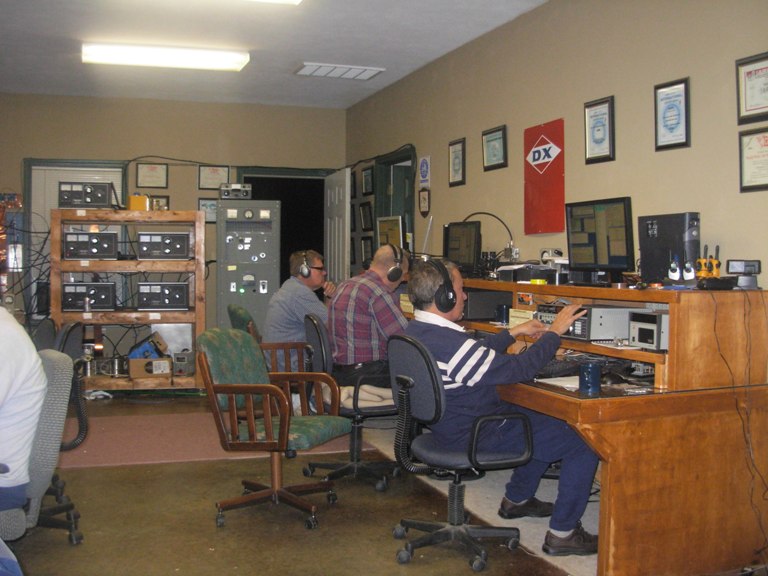
Hamradio contesting - a menace to hamspirit

Well, some will say that i am wrong only by reading the title...
As a foreword, it is not my intention to blame contesters.
I am in my early 40 and have a busy job, some other particular projects and can operate my radio in weekends.
I do not have, yet, established a "big-gun" station; only 100 W from a FT2k, a vertical and a Inverted V antenna on the rooftop of my building.
I also have some familly obligations here so I cannot stand in front of my radio to make QSOs in weekdays.
The only time I have for chatting is in the weekends, even in holydays BUT...
Yeah, you already know!
Try to search a weekend WITHOUT a contest!
As a practical observation, not a single weekend for old fashion hamradio QSO in this summer! Everytime I powered up the radio, there was a contest. thousand of Watts, QRM from "Russian QRP" and all you can hear are contest exchanges and the ubiquitous "599".
Is this hamradio? I think is not!
The regulations - at least in YO - ask for operators to send a REAL REPORT in the QSO's. I don't know how, but in the contests I NEVER heard a REAL REPORT based on Strenght, Rediability and Tone!
We, the OM, teach the younger how to sent a receiving report in a QSO. The contest means that the contesters are tested about the capacity to copy signals, to wrote the (correct) informations in a LOG and to sent back some (correct) informations AND to make a certain number of QSO's in the contest time..
Instead, the contest become more and more a speed run.
I am bored of local QSO's about weather and cristal sets; I want to discuss with other hams about Emergency comms, about how their local clubs manage to keep the team, about new technology.
Well, it is almost impossible to do so in weekends on shortwave!
Try this on a contest!
The progress in hamradio, at least in the last years, means big antennas and QRO mainly for the contest activity.
It is almost impossible to chat with a fellow ham about new receving techniques, about new modulations or something like that!
The ham bands was established also for experimenting but, at least on IARU bands, you hardly find a non-contesting segment to do some tests with a faint signal station... Spletters and QRM.
So, more and more, the experimenting activity moved to internet discussion groups which, in my opinion means death to real hamspirit! The contesting is only a fraction of that!

73 de YO3HJV.


The picture is courtesy of http://k5go.com/

21 August 2013

FT 857D Manpack - revisited, ep.3.

Yeap, the last week we tested the new manpack. Well, "tested" is too much because we was too busy with "palinca*" due to the 15 Celsius deg at Muntele Rosu. In the pictures YO3IPC may be seen testing the gear. Some 20m QSO with A61, UR and DE was made to proof the concept.

25W to 50W was used  and the variable ratio UnUn was the best solution for tuning the Harris foldable whip from 80m to 12 m.

Some guys asked me for the antenna... Is a HARRIS, AT-271A with a AB-129/PR Flexibase for this antenna.

Has around 2m heigh (abt 7 feet ) and covers nicely the entire HF ham bands.


09 August 2013

FT 857D Manpack - revisited, ep.2

Yeap! It;s finished and it work!

Here are the promises pictures. Sorry for the quality but I only have a HTC mobile phone!

The second, third and fourth paintjob!  Nice black matte finish on the main frame.
Notice the lateral frames; made from aluminium, 2mm thick for keeping the radio and the ATU.


A plastic box. The plan is to put the fuses inside on a small PCB.


I have to put a bended aluminium tape to compensate for the smaller width of the ATU.
On the other side, the ATU is fixed on the lateral frame with the original screws. One of them was moved a little, around 10 mm to have the exact 8.9 mm between them, like on the FT857.


Here it is, assembled but with no battery.


A large aluminium was placed on the main frame; on it, I put the UnUn, the VHF/UHF antenna connector and the fuse box.


Remember? I told you that the antenna is a Harris foldable. This is the triple-use special connector. It accomodate the antena, can be used like a clamp for a wire antenna and also have a BNC connector inside. Nice job!
TNX YO3FWL for the antenna, will be use on this radio to make happy a fellow ham!


This is the SPG, the Al plate. On the right, is the VHF/UHF antenna connector. On the right, it's a small Hammond box with a selectable ratio UnUn (4:1 or 9:1) and also a bypass for othe antennas.
Between them, the plastic box with the 20 Amp fuse.


I hate the bulky Yaesu connector so I cut it and put other instead. It's a professinal one and on the radio side has two circuits. One for the FT857 and oter for the ATU. Simply disconnect them and, voila, no power!


Here will be the battery.


A little housekeeping. Put the wires around the pipes.


 Detailed view of the UnUn. Notice the switches for Bypassing and for ratio...


It was to late to film it on the test...
I will be back soon with the manpack in action.

73 de YO3HJV

08 August 2013

FT 857D Manpack - revisited, ep.1

So...
A few years ago, I made a manpack based on a FT857D. This days, a friend of mine, YO3IPC, amazed by the versatility of the IC-703 I use, ask me if I can help him with some ideeas for a FT857D manpack.
Therefore, I draw some plans for a "powerfull" 25W manpack.

The plan was to use a 12V, 12Ah SLA and a Harris foldable antenna, a 9:1 BALUN and a Z11 PRO ATU. All around a FT857D from Yaesu,  so a (very) solid frame will be needed.
We choose a 1/2 inch plumbing pipe (copper) and some aluminium 2mm thick tape.

Today we made the frame.We'll do the rest tomorrow!


 The first lateral frame (The Saxophone):


The bottom section:


The full frame after soldering:


 The same frame after some polishing:


... and after the first paint job...


... ready for mounting the radio, the ATU and other stuff!


Most viewed posts in last 30 days