08 September 2013

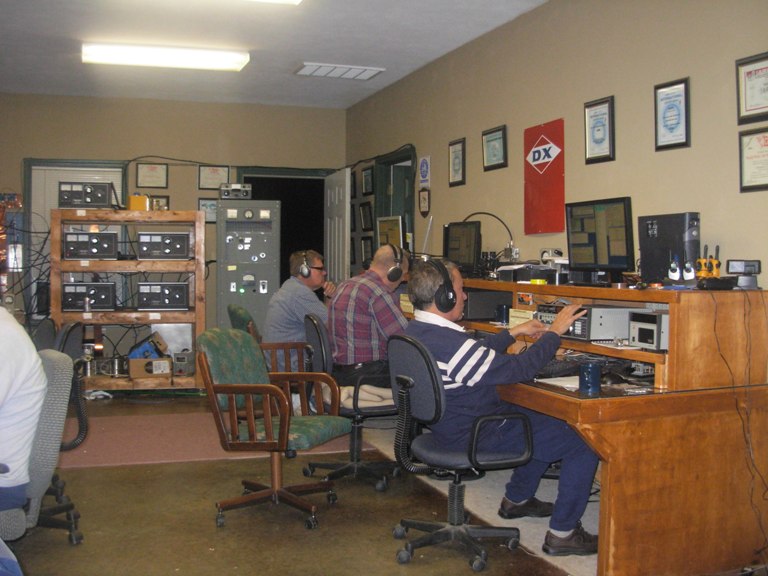
Hamradio contesting - a menace to hamspirit

Well, some will say that i am wrong only by reading the title...
As a foreword, it is not my intention to blame contesters.
I am in my early 40 and have a busy job, some other particular projects and can operate my radio in weekends.
I do not have, yet, established a "big-gun" station; only 100 W from a FT2k, a vertical and a Inverted V antenna on the rooftop of my building.
I also have some familly obligations here so I cannot stand in front of my radio to make QSOs in weekdays.
The only time I have for chatting is in the weekends, even in holydays BUT...
Yeah, you already know!
Try to search a weekend WITHOUT a contest!
As a practical observation, not a single weekend for old fashion hamradio QSO in this summer! Everytime I powered up the radio, there was a contest. thousand of Watts, QRM from "Russian QRP" and all you can hear are contest exchanges and the ubiquitous "599".
Is this hamradio? I think is not!
The regulations - at least in YO - ask for operators to send a REAL REPORT in the QSO's. I don't know how, but in the contests I NEVER heard a REAL REPORT based on Strenght, Rediability and Tone!
We, the OM, teach the younger how to sent a receiving report in a QSO. The contest means that the contesters are tested about the capacity to copy signals, to wrote the (correct) informations in a LOG and to sent back some (correct) informations AND to make a certain number of QSO's in the contest time..
Instead, the contest become more and more a speed run.
I am bored of local QSO's about weather and cristal sets; I want to discuss with other hams about Emergency comms, about how their local clubs manage to keep the team, about new technology.
Well, it is almost impossible to do so in weekends on shortwave!
Try this on a contest!
The progress in hamradio, at least in the last years, means big antennas and QRO mainly for the contest activity.
It is almost impossible to chat with a fellow ham about new receving techniques, about new modulations or something like that!
The ham bands was established also for experimenting but, at least on IARU bands, you hardly find a non-contesting segment to do some tests with a faint signal station... Spletters and QRM.
So, more and more, the experimenting activity moved to internet discussion groups which, in my opinion means death to real hamspirit! The contesting is only a fraction of that!

73 de YO3HJV.


The picture is courtesy of http://k5go.com/

21 August 2013

FT 857D Manpack - revisited, ep.3.

Yeap, the last week we tested the new manpack. Well, "tested" is too much because we was too busy with "palinca*" due to the 15 Celsius deg at Muntele Rosu. In the pictures YO3IPC may be seen testing the gear. Some 20m QSO with A61, UR and DE was made to proof the concept.

25W to 50W was used  and the variable ratio UnUn was the best solution for tuning the Harris foldable whip from 80m to 12 m.

Some guys asked me for the antenna... Is a HARRIS, AT-271A with a AB-129/PR Flexibase for this antenna.

Has around 2m heigh (abt 7 feet ) and covers nicely the entire HF ham bands.


09 August 2013

FT 857D Manpack - revisited, ep.2

Yeap! It;s finished and it work!

Here are the promises pictures. Sorry for the quality but I only have a HTC mobile phone!

The second, third and fourth paintjob!  Nice black matte finish on the main frame.
Notice the lateral frames; made from aluminium, 2mm thick for keeping the radio and the ATU.


A plastic box. The plan is to put the fuses inside on a small PCB.


I have to put a bended aluminium tape to compensate for the smaller width of the ATU.
On the other side, the ATU is fixed on the lateral frame with the original screws. One of them was moved a little, around 10 mm to have the exact 8.9 mm between them, like on the FT857.


Here it is, assembled but with no battery.


A large aluminium was placed on the main frame; on it, I put the UnUn, the VHF/UHF antenna connector and the fuse box.


Remember? I told you that the antenna is a Harris foldable. This is the triple-use special connector. It accomodate the antena, can be used like a clamp for a wire antenna and also have a BNC connector inside. Nice job!
TNX YO3FWL for the antenna, will be use on this radio to make happy a fellow ham!


This is the SPG, the Al plate. On the right, is the VHF/UHF antenna connector. On the right, it's a small Hammond box with a selectable ratio UnUn (4:1 or 9:1) and also a bypass for othe antennas.
Between them, the plastic box with the 20 Amp fuse.


I hate the bulky Yaesu connector so I cut it and put other instead. It's a professinal one and on the radio side has two circuits. One for the FT857 and oter for the ATU. Simply disconnect them and, voila, no power!


Here will be the battery.


A little housekeeping. Put the wires around the pipes.


 Detailed view of the UnUn. Notice the switches for Bypassing and for ratio...


It was to late to film it on the test...
I will be back soon with the manpack in action.

73 de YO3HJV

08 August 2013

FT 857D Manpack - revisited, ep.1

So...
A few years ago, I made a manpack based on a FT857D. This days, a friend of mine, YO3IPC, amazed by the versatility of the IC-703 I use, ask me if I can help him with some ideeas for a FT857D manpack.
Therefore, I draw some plans for a "powerfull" 25W manpack.

The plan was to use a 12V, 12Ah SLA and a Harris foldable antenna, a 9:1 BALUN and a Z11 PRO ATU. All around a FT857D from Yaesu,  so a (very) solid frame will be needed.
We choose a 1/2 inch plumbing pipe (copper) and some aluminium 2mm thick tape.

Today we made the frame.We'll do the rest tomorrow!


 The first lateral frame (The Saxophone):


The bottom section:


The full frame after soldering:


 The same frame after some polishing:


... and after the first paint job...


... ready for mounting the radio, the ATU and other stuff!


07 August 2013

HELLO WORLD with PIC24 and TFT

I just received a few days ago my Easypic Fusion 7 board with a PIC24 microcontroller. It's just beautiful!
Well, it's a giant step from PIC16F but my friend and mentor said that it's just no reason to continue to learn about microcontrollers on an old one. So, I follow his words and jumped to 24 and DSPic... First, PIC24.
This is my first piece of program written in C, reading the value from the ADC, translated from binary to decimal and then sent it to the TFT display.
Here I found the knowledge.

Most viewed posts in last 30 days