19 April 2022

Heaphones amplifier PAM8610 - Amplificator stereo pentru casti

I have long felt the need for a headphone amplifier that can be connected to various signal sources, stereo or mono.

A few years ago I built one based on a specialized circuit, LA-xxxxx (I forget the code) but it was dependent on the power supply from the socket as it consumed quite a lot and needed a symmetrical power supply.

And the case was a bit big and ugly....

A little while ago I saw an ad for sale for a 10W amplifier based on the Class D circuit, the PAM8610.

This is a modern amplifier intended for use with 10-15W speakers with 8 Ohm impedance.

I remembered that I also have such a module that has been lying around for a while in my junk boxes and I thought I could use it for a headphone amplifier, which can also be used on speakers if needed.

The major problem is that the speakers are driven on each channel by a symmetrical "H" bridge, without a common ground circuit.

For this reason, connecting stereo headphones, which have three wires, becomes problematic.

My first impulse was to search the boxes for two small signal transformers to make the adaptation but laziness won out and I was left staring at the ceiling, comfortably seated on the sofa thinking of a less bulky solution...

I won't go into the details of how amplifiers work in Class D but there is the possibility of making a contrivance to connect common grounded headphones.

The figure below shows the schematic I used successfully and the finished product, encased and powered by a 9V battery type 6F22.


The resistance values are:

R1 - 150 Ohm (two in parallel!)

R2 - 560 Ohm.

All resistors are 0.25W.

To reduce crosstalk it is best to use as equal resistors as possible on the two branches.

The 17-20 mA power consumption in operation, with LED makes it suitable for powering from this type of battery, the amplifier running down to 6.5V, on test.

It sounds great!


De mult timp simt nevoia unui amplificator de casti care sa poata fi conectat la diverse surse de semnal, stereo sau mono.

Acum cativa ani am construit unul bazat pe un circuit specializat, LA-xxxxx (am uitat codul) dar acesta era dependent de alimentarea de la priza intrucat consuma destul de mult si avea nevoie de sursa simetrica pentru alimentare.

Si carcasa era cam mare si urata....

Cu putin timp in urma am vazut un anunt de vanzare pentru un amplificator de 10W bazat pe circuitul in Clasa D, PAM8610.

Acesta este un amplificator modern, destinat a fi utilizat cu boxe de 10-15W cu impedanta de 8 Ohm.

Mi-am adus aminte ca am si eu un astfel de modul care sta de ceva vreme prin cutiile cu troace si m-am gandit ca il pot destina unui amplificator pentru casti si care, la nevoie, poate fi utilizat si pe difuzoare.

Problema majora este ca difuzoarele sunt actionate pe fiecare canal de cate o punte  tip "H", simetric, fara un circuit comun de masa.

Din acest motiv, conectarea castilor stereofonice, care au trei fire, devine problematica.

Primul impuls a fost sa caut in cutii dupa doua transformatoare de semnal mic pentru a face adaptarea dar lenea a invins si am ramas cu ochii in tavan, comod asezat pe canapea gandindu-ma la o solutie mai putin voluminoasa...

Nu intru in detaliile modului de functionare a amplificatoarelor in Clasa D dar exista posibilitatea de a realiza un artificiu pentru a conecta casti cu masa comuna.

In figura de mai jos este prezentata schema pe care am uitilizat-o cu succes precum si produsul finit, incasetat si alimentat dintr-o baterie de 9V tip 6F22.

Valorile rezistentelor, obtinute prin tatonare sunt:

R1 - 150 Ohm (cate doua in paralel!)

R2 - 560 Ohm.

Toate rezistentele sunt de 0.25W.

Pentru reducerea diafoniei este bine sa folosim rezistente cat mai egale pe cele doua ramuri.

Consumul de numai 17-20 mA in functionare, cu tot cu LED il face potrivit pentru alimentarea din acest tip de baterie, amplificatorul functionand pana la 6.5V, pe testare.

Se aude minunat!


24 March 2022

Clubul Competitional Bavarez cu privire la decizia CQ WPX

Ca urmare a deciziei CQ WPX de a limita participarea la concursuri, Chris, DL1MGB a postat o declaratie pe pagina BCC - Bavarian Contest Club prin care anunta decizia de a nu mai participa la sponsorizarea plachetelor WPX.

Mai jos este traducerea, originalul il gasiti aici.

Este greu de găsit cuvintele potrivite pentru situația actuală la care asistăm Ucraina în aceste zile. De multe ori rămânem într-o dispoziție de furie, tristețe și anxietate. 

Mulți dintre noi trăim departe de evenimente. 

Suntem îngrijorați pentru persoanele afectate și ne întristăm împreună cu ei pentru pierderile lor. 

Dincolo de donațiile noastre pentru a ușura o mică parte din suferință, opțiunile noastre de a ajuta sunt limitate. 

Embargourile economice, boicoturile și declarațiile politice care sunt concentrate să lovească guvernele și persoanele responsabile, sunt cu siguranță necesare, dar nu întotdeauna satisfac așteptările.

De curand, CQ Communications, Inc., a decis să limiteze participarea radioamatorilor din Rusia, Belarus și regiunea Donbas la concursurile CQ World Wide DX și WPX pe care le organizeaza. 
Jurnalele din aceste regiuni vor conta doar ca jurnal de verificare (check log), iar contactele cu acestea vor număra zero puncte pentru noi toți.

Clubul de Concurs Bavarez consideră această decizie ca fiind inadecvată și fara utilitate  pentru comunitatea de radioamatori care participa la concursuri.

Printre alte principii nobile, Radioamatorul este de natură apolitică.
Radioamatorismul este un hobby, o activitate de timp liber. 
Radioamatorii a fost întotdeauna mândri că au conectat diferite țări, culturi și oameni cu opinii diferite. 
Radioamatorismul nu a fost niciodată conceput ca aplicare a presiunii politice.

Clubul de Concurs Bavarez consideră că nu este o deturnare a competiției oferirea de plachete ca premiu atunci când sunt exclusi un număr mare de concurenți în același timp. 

A exclude un grup de concurenți doar pentru că sunt conduși de un regim care în prezent este disputat și acuzat puternic nu este ceea ce noi intelegem prin Ham Spirit.

Prin urmare, clubul de concurs bavarez va opri temporar sponsorizarea plăcii pentru viitoarele concursuri CQ World Wide WPX SSB și CW. 
Aceasta include si cele patru plăcuțe pentru categoriile Rookie și Youth. 
Clubul de Concurs Bavarez este, de asemenea, sponsor al altor patru plăcuțe în Concursul CQWW DX și Concursul CQWW RTTY DX. 

Această sponsorizare va fi evaluată ulterior.

Chris DL1MGB
Președintele Clubului de Concurs Bavarez

23 March 2022

Please!

Amateur radio can help rebuild bridges between PEOPLE after the voice of the weapons goes out. 

Wars are horrible and the principles of amateur radio can help us preserve our humanity by being able to see in the other beyond its religious, political, economic or social class choices. 

How many conflicts have existed on the Globe since the beginning; if we had let them prevail, now we would not have had amateur radio. 

There are a lot of other options through which you can get involved on one side or the other, just let amateur radio remain one of the bridges on which peace can come. 

73 de YO3HJV

16 March 2022

Russian AZART R-178 in Ukraine War

Despite the rumors, the Russian are not using Baofeng Two Way radios in Ukraine invasion.

They are using more modern and advanced communication systems, many of them head to head to NATO ones and even better than the Motorola DP4801 used by Ukraine forces.


They are also use MotoTrbo radios like SL-1600 but these are supposed to be captured and used for eavedropping to enemy comms.


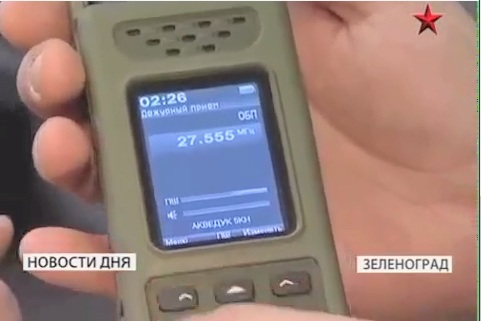
The most interesting of all is the AZART system.

AZART R178 is a sixth generation SDR radio able to do almost every waveform.

The tactical radios communicate on frequencies between 27-520MHz at ranges up to 4 kilometres. The MoD states they can also communicate with mobile phones and can receive modulated signals – the turning of digital data into radio signals.

The AZART-P1 (designated R-187) appears to have entered service in 2017, with deliveries continuing intermittently thereafter. It is designed to provide secure, jam-resistant communications for the Russian armed forces.

Due to implementation of a unique algorithm of pseudo-random operational frequency readjustment (FHSS) that becomes impossible for the enemy's EW assets to suppress the radio channels, intercept or input falsified data.

Integrated navigation means provide self-positioning with accuracy of 25 m in latitude/longitude and 40 m in altitude. It is possible to exchange data on positions of subscribers in automatic and manual modes.

The R-187-P1E portable radio station has an inbuilt IR port and USB interface to plug in the PC.


The radio station has:

an automatic relay mode and
a time division multiplex mode.

Inbuilt means of packet switching ensure interconnectivity of the Azart system with data transfer networks and civil cellular radio telephone networks. This advantage can be used by Special Forces units when conducting missions in urban areas.

Algorithms integrated into the radio stations' software allow realization of network solutions with properties of self-organization and self-recovery.

It enables establishment of distributed digital networks in the combat area using only two types of radio stations in portable and vehicle-mounted versions.


Due to implementation of a unique algorithm of pseudo-random operational frequency readjustment (FHSS) that becomes impossible for the enemy's EW assets to suppress the radio channels, intercept or input falsified data.

Integrated navigation means provide self-positioning with accuracy of 25 m in latitude/longitude and 40 m in altitude. It is possible to exchange data on positions of subscribers in automatic and manual modes.

The R-187-P1E portable radio station has an inbuilt IR port and USB interface to plug in the PC.

The radio station has:

an automatic relay mode and
a time division multiplex mode.

Inbuilt means of packet switching ensure interconnectivity of the Azart system with data transfer networks and civil cellular radio telephone networks. This advantage can be used by Special Forces units when conducting missions in urban areas.

Algorithms integrated into the radio stations' software allow realization of network solutions with properties of self-organization and self-recovery.

 The software supports all existing and future communication standards. The radio station is made exclusively on the domestic element base. The basis of the PC Azart P1 is a domestic microprocessor with a frequency of 1GHz, the manufacturing technology corresponds to the 65nm process. The time of continuous operation of the product from one battery is from 6 to 12 hours. Provides data transfer at speeds up to 7.2 kbps. "Azart" allows you to determine the coordinates of GLONASS / GPS with an accuracy of 25 m in latitude and longitude and 40 m in height. Portable radio stations of the 6th generation R-187P1 (previously called "Azart" P1) were successfully used to ensure the security of the XXII Winter Olympic Games and the XI Winter Paralympic Games in Sochi. The decision to use the R-187P1 radio stations was made following the results of a positive experience of use in providing security measures at the Universiade in Kazan. Representatives of the Ministry of Defense of Russia developed and implemented, together with the specialists of NPO Angstrem, a complex scheme for organizing radio communications, which made it possible to organize stable and continuous control of units of the group of troops throughout the territory of the areas of responsibility (taking into account the complexities and features of the terrain) and complete all tasks in full. In the process of organizing radio communications using the R-187P1 during the Olympic Games, the necessary number of radio networks was organized, several relay points were deployed, both ground and air, which made it possible to significantly increase the range of radio communications (ground - up to 18 km, air - up to 70 km). It is worth noting that R-187P1 were also used as repeaters. This is a radio station with programmable radio standards. The radio station operates in a wide range of bands and is capable of providing communication between all existing types of telecommunication technologies - satellite, cellular, Internet, FM radio or digital TV, etc. It alone is able to replace the entire existing fleet of radio stations, while configuring the desired frequency ranges and types of communication is done programmatically. Besides, the device is highly resistant to electronic countermeasures. “I would like to note the Azart radio station of the Angstrem company with a frequency response rate of 20,000 jumps / s. Although not everything worked out in this project, but a bold idea and a non-trivial approach to its solution deserve praise,” said Yuri Sofyannikov, director of the YURION STC. The hopping frequency of 20,000 jumps / sec, such "escape" guarantees resistance to suppression, even if the interference generator hangs overhead under the wing of the UAV or is located several hundred meters away. If there is none, then Azart-P1 is able to operate at fixed frequencies. but a bold idea and a non-trivial approach to its solution are commendable,” said Yuri Sofyannikov, director of the YURION STC. The hopping frequency of 20,000 jumps / sec, such "escape" guarantees resistance to suppression, even if the interference generator hangs overhead under the wing of the UAV or is located several hundred meters away. If there is none, then Azart-P1 is able to operate at fixed frequencies. but a bold idea and a non-trivial approach to its solution are commendable,” said Yuri Sofyannikov, director of the YURION STC. The hopping frequency of 20,000 jumps / sec, such "escape" guarantees resistance to suppression, even if the interference generator hangs overhead under the wing of the UAV or is located several hundred meters away. If there is none, then Azart-P1 is able to operate at fixed frequencies.

akveduk.jpg

 Portable radio station "Azart-P1" provides the following types and modes of operation:
 - voice transmission both in analog form (FM) and in digital form (TETRA, PRCH) in simplex negotiation mode; 
- voice transmission in duplex negotiation mode (if TETRA infrastructure is available);
- data transfer at speeds up to 7.2 kbps;
- pseudo-random frequency tuning at a rate of 20,000 jumps per second;
 - determination of coordinates using space radio navigation systems (CRNS) GLONASS / GPS with a positioning accuracy of at least 25 m in latitude and longitude and 40 m in height (using only C / A - code);
 - scanning reception at predetermined frequencies (FM);
- duty reception; 
- duty reception with an economizer;
- time division relaying (TETRA);
 - text messaging (TETRA);
- signal-code communication;
- automated input of radio data via wired and wireless channels.
 - operating temperature range from minus 30 to plus 55 degrees C;
 - range of extreme temperatures from minus 50 C to plus 55 degrees C;
- there are no requirements for stability when exposed to a shock wave, ionizing radiation, electromagnetic and light pulses of a nuclear explosion, acoustic noise, mold fungi, salt (sea) fog, special media (rocket fuel components).
The time of continuous operation of the product from one rechargeable battery should be: at least 6 hours for BA PAKD.563511.001 and at least 12 hours for BA-12 PAKD.563511.005 with a transmission / reception / duty reception time ratio of 1:1:9.
The operating frequency range of the product in the VHF range should be 27 ... 220 MHz, in the UHF1 range 220 ... 520 MHz with an operating frequency grid step: - 1; 6.25; 8.33; 12.5; 25 kHz in the VHF band; - 25; 250; 500; 1000 kHz in the UHF1 range 
The product must provide the following operations with radio data and settings:
 - automated input via wireless Bluetooth and infrared channel;
- automated input via a wired channel;
 - manual input from the front panels;
- automated performance monitoring;
 - input via communication channel;
- emergency erasure.
The transceiver PAKD.464113.006 of the product must have interfaces for setting (configuring) RS-485, USB2.0.
The communication range of the product when operating in the PF mode with the same type of radio stations and at the maximum output power of the transceiver must be at least 4 km and provided during 99% of the time of the day, at any time of the year and on 90% of the terrain, at frequencies free from interference, in the parking lot and in motion on medium terrain.
 The product must provide the following type of services
 - voice transmission in duplex negotiation mode between 2 subscribers (if TETRA infrastructure is available);
- file exchange in TETRA mode;
- voice transmission in the simplex mode of negotiating between several subscribers simultaneously (circular communication);
- voice transmission in the simplex mode of negotiation between 2 subscribers;
- exchange of navigation information in TETRA mode;
 - transmission of text messages in real time in TETRA mode;
- signal-code communication in TETRA mode;
The product must provide software-defined tuning according to the pseudo-random law of frequency channels (frequency hops), with a maximum speed of at least 20,000 hops per second.
The product must provide counter-operation on the same sections of the frequency range with radio stations R-163, R-168, R-169 and "Duet" in the FChS mode.
 The device for inputting radio data via the USB interface must provide reading and writing information, the maximum amount of stored information is 512MB.
 Dimensions of the transceiver PAKD.464113.006 no more than (195×70×40) mm.


Airborne repeater for AZART System, AZART-UPP


AZART R-187 Main Characteristics:


Most viewed posts in last 30 days